
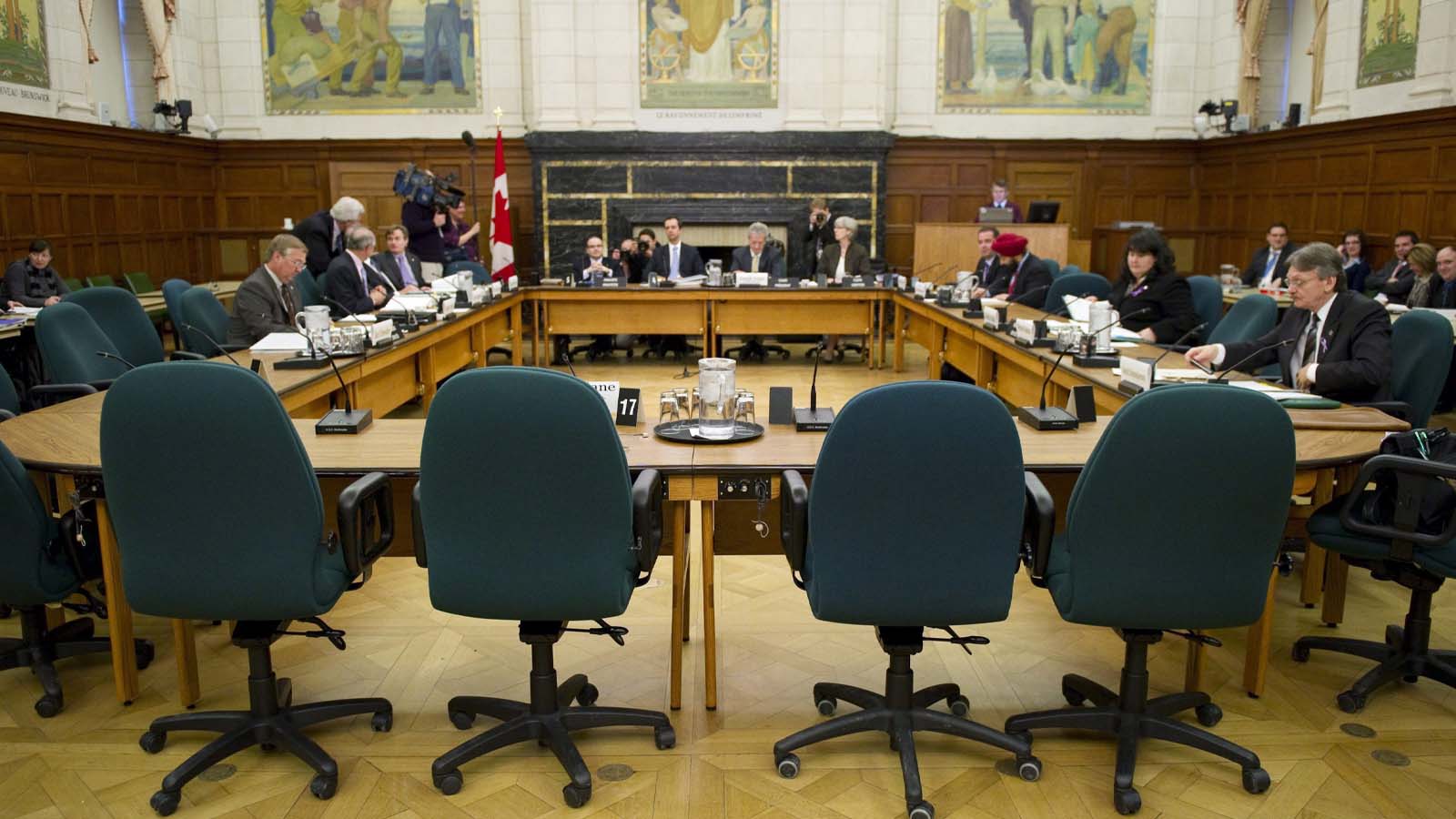
- The Commons Heritage committee agreed Nov. 3 to report the Canada sports betting advertising bill S-211 with amendments.
- The minister’s deadline for the framework and strategy report doubles from one year to two years after the act takes effect.
- The amendments let the Governor in Council designate the responsible minister and change the duty to consult from “must” to “may.”
- The report lists no amendment to the CRTC review due within a year of royal assent or to the framework’s advertising measures.
OTTAWA – The Commons Heritage committee sent Bill S-211 back to the House Nov. 4 with amendments, the largest of which gives the minister two years instead of one to produce the national sports betting advertising framework the bill requires.
The Standing Committee on Canadian Heritage agreed Nov. 3 to report the bill with amendments, according to its ninth report to the House. The Parliament of Canada’s LEGISinfo database lists the report as presented Nov. 4.
Framework Report Deadline And Release Windows Lengthen
As the Senate passed it, clause 4 gave the minister one year from the act’s coming into force to finish a report that lays out the framework and a strategy to carry it out. The committee’s amendment makes it two years.
Two companion amendments also stretch the steps that follow. The report must be tabled in each House on “any of the first 30 days on which that House is sitting,” up from 15, and the minister then gets 15 days instead of 10 to make it public.
Clause 6 is untouched in the report. It orders the Canadian Radio-television and Telecommunications Commission (CRTC) to examine whether its own rules and policies do enough to blunt the harm of betting ads, with the commission’s findings owed to the minister within a year of royal assent. An act cannot take effect before royal assent, so that CRTC report would reach the minister at least a year before the framework report is due.
Governor In Council Picks The Minister And Consultation Becomes Optional
The Senate version defined “Minister” as the Minister of Canadian Heritage. The committee’s first amendment instead defines the term as the member or members of the King’s Privy Council designated under a new section 2.1. That section lets the Governor in Council, in practice the federal cabinet, designate one or more of them by order.
Clause 3 in the Senate text said the minister “must consult” a list that runs from fellow federal ministers and the provinces and territories to Indigenous groups, provincial gaming regulators and sports and ethics bodies. The committee’s amendment replaces that opening wording with “the Minister may consult with.”
Clinical Practice Guidelines Replace National Standards
Paragraph 3(2)(c) told the framework to “set out national standards” covering how harmful gambling and addiction are prevented and diagnosed and how affected people are supported. The committee’s amendment leaves the rest of the paragraph alone and replaces “national standards” with “clinical practice guidelines.”
Advertising Measures Stay As The Senate Wrote Them
The report amends clauses 2, 2.1, 3 and 4 only. Paragraph 3(2)(a) is not among the changes. It is the part that tells the framework to name measures “with a view to restricting” sports betting ads, including caps on how many run, where and how widely, and limits or a ban on celebrities and athletes fronting them. The celebrity question is the subject of an earlier report on Drake’s Stake.com promotion.
The bill tells the minister to build a framework and sets no advertising limits of its own. The ads it covers promote betting at sportsbooks in Canada and other online gambling sites for Canadians.
Two Meetings Preceded The Report
The committee’s report tables the minutes of two meetings, Nos. 50 and 51. The first, on Oct. 29, listed Sen. Marty Deacon, the bill’s Senate sponsor, and Waterloo MP Bardish Chagger as witnesses, along with Kevin Desjardins of the Canadian Association of Broadcasters and Renze Nauta of Cardus, according to the minutes.
The notice for the Nov. 3 meeting scheduled officials from the CRTC, the Department of Health and the Department of Canadian Heritage, with clause-by-clause consideration listed as an agenda item. The minutes of the Nov. 3 meeting had not been posted as of Nov. 5.
Report Stage Comes Next And The Senate Must Agree
LEGISinfo lists no report-stage activity, and third reading has not been reached. The House passed the bill at second reading April 22, 2026, by 291-28, and the Senate passed it Oct. 21, 2025. A bill must pass both chambers in identical form before royal assent, according to the Senate’s guide to how a bill becomes law, so the Senate would have to agree to any amendments the House adopts.
